

Dutch-style protected intersections are gaining traction in North America as an effective design solution to improve safety for cyclists and pedestrians. Studies indicate that these intersections can reduce right-hook collisions by up to 70% in urban areas, addressing the risks faced by thousands of users each year.
The key features of Dutch-style intersections include:
• Corner Refuge Islands: These curb extensions slow turning vehicles and create protected waiting areas for cyclists, improving driver visibility of crossing users.
• Set-back Crossings: Positioned about 20–25 feet back from the intersection, these crossings enhance sightlines and reaction time, further reducing collision risks.
• Bike Queue Areas: Cyclists wait in front of the vehicle stop line, increasing their visibility to drivers as traffic lights change.
• Yield Zones for Drivers: A designated space between the car stop bar and the bike crossing encourages drivers to yield before entering pedestrian and cyclist areas.
•Dedicated Signal Phasing: Separate or early green signals for cyclists and pedestrians eliminate conflicts with turning vehicles.
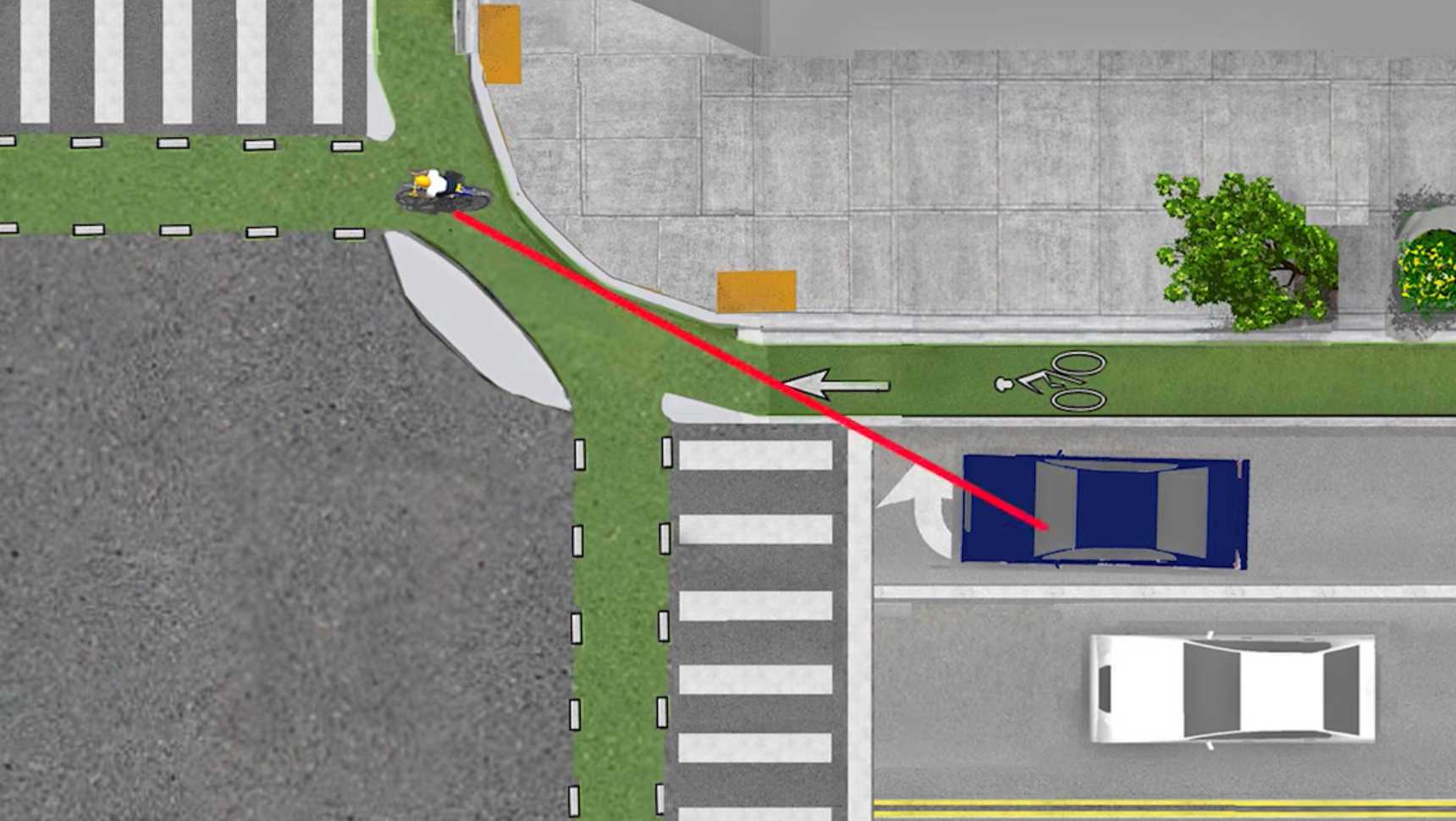
Field studies show these designs significantly increase yielding rates among drivers, with slower turning speeds thanks to tighter curbs, thereby reducing crash severity. The layout supports clearer paths for both cyclists and pedestrians, making crossings shorter and more manageable.
Since the introduction of Dutch-style intersections in cities like Davis, CA, and Salt Lake City, UT, from 2015 to 2016, there has been a noticeable increase in their adoption, with cities such as Portland, OR, and Austin, TX, reporting crash rate reductions of up to 30%. The integration of these intersections into Vision Zero action plans is gaining support from organizations like NACTO and FHWA.
Despite challenges related to retrofitting in dense urban environments, cities such as Seattle have effectively implemented modular designs and phased strategies to adapt these layouts.
As these intersections transform dangerous crossings into safer spaces, they encourage increased walking and cycling, potentially enhancing overall urban mobility. Advocates are encouraged to explore local Vision Zero plans to promote the incorporation of protected intersections in their communities.
Share this:

Discover more from Fullerton Observer
Subscribe to get the latest posts sent to your email.
Categories: Community Voices, Local News


These draconian methods, in lieu of actually designing roads for all, have decreased safety and usability, limiting accessibility. They are anti-mobility. They are a fraud! This is imposed by a very select group that refuses input from any one else~ including from bicyclists. It is not an accident that every “locally” produced version is exactly the same~ because it is not locally grown! It is forced on people against their wills! It is time to throw these people out and let sane people, not connected to land developers, design actually safe and usable roads. It is time to end this oppressive undemocratic usurped movement!