
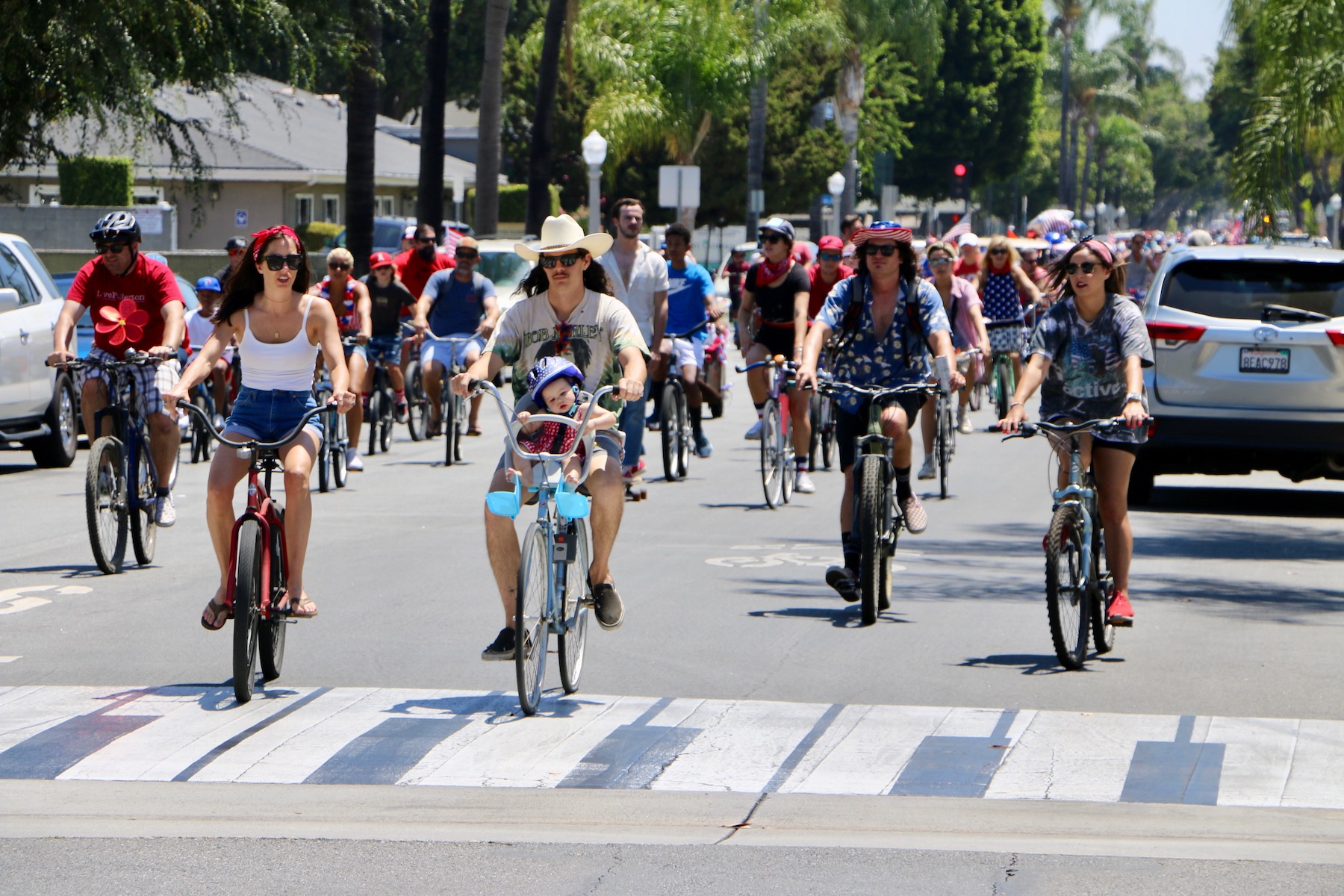
Fullerton’s City Council made a deliberate choice in January 2025. After hearing from residents and committee members, it adopted Resolution No. 2025-005, kept the Active Transportation Committee (ATC) as its own body, and directed that it “shall meet monthly.”
This year, the ATC has met only three times out of ten. Now its low activity is being cited as a reason it may not be needed. Before anyone accepts that conclusion, it’s worth looking at how the committee got here, and why it still matters.
A committee set up to look irrelevant
The pattern works like a loop. Meetings are canceled because staff says there are no agenda items. Plans that fall within the committee’s purpose go to Council without passing through it. The committee’s output shrinks. Then the shrinking output becomes evidence that the committee isn’t needed, which justifies more cancellations.
That reasoning is circular, but it doesn’t look circular from the outside. A council member who sees seven canceled meetings sees a committee with nothing to do. They don’t see the Parks Master Plan, with its trails and safe routes to parks, or the Open Space and Conservation Element, with a full goal on trail connectivity and a rail-to-trail strategy, neither of which went to the ATC. They don’t see the agenda items the committee chair proposed. The cause is invisible; only the effect shows.
Researchers have names for this. Sociologist Robert Merton called it a self-fulfilling prophecy: a belief that something doesn’t matter produces treatment that makes it not matter. Political scientists Peter Bachrach and Morton Baratz described the “second face of power,” the power to decide what never reaches a vote. Nobody voted to cut the ATC out of this year’s planning. Those plans simply never arrived. Management researchers call the workplace version the “set-up-to-fail syndrome”: give someone less responsibility, watch their contribution shrink, and take that as proof you were right.
The human toll compounds it. ATC members are unpaid volunteers. They leave their jobs early to attend. When meetings are canceled again and again, volunteers burn out, seats go unfilled (one vacancy lasted over 15 months), and residents stop coming. Then thin attendance becomes one more sign of irrelevance.
None of this requires bad intent. Public records don’t show that meetings were canceled to engineer a merger, and staff point to real constraints, including the lack of a transportation planner. But neglect and design produce the same result. Internal emails show senior staff discussing how the committee might “evolve into an existing committee” while its agenda kept shrinking. A council-created committee shouldn’t be reshaped by drift.
In an email to Mayor Fred Jung, Chris Norby, Jung’s appointee to ATC, expressed the view that the committee’s continued existence was unnecessary and that its functions could be absorbed into the Transportation and Circulation Commission (TCC).
TCC already handles a broad range of transportation issues, including roadway circulation, traffic regulations, and parking matters. Consolidation could reduce administrative responsibilities, but it would also eliminate a separate forum dedicated specifically to walking, bicycling, and other forms of active transportation that listens to the public and drafts solutions.
Staffing limits are real, but the ATC doesn’t need elaborate presentations to be useful. Meetings can track plan implementation, hear resident concerns, review items already headed to Council, and help shape grant applications. Lighter agendas beat no meetings.
If the city believes the ATC should meet less or do less, that is a policy decision for the Council to make openly, with public input, as it did in 2025. It shouldn’t happen by default through canceled meetings. And the committee’s value should be judged after it has been allowed to work, not before.
Why the ATC is worth keeping
Every Fullerton resident who rides a bike to work, walks a kid to school, or takes a weekend ride on the trails has a stake in how our streets are designed.
 1. It does a job no other body does. The Transportation and Circulation Commission handles signals, traffic rules, and parking, and does that work well. But a commission balancing car traffic will always weigh bike lanes against parking spaces and travel times. The ATC is the only body focused entirely on people walking, biking, using mobility devices, and using trails. Folding it into the TCC would turn a dedicated forum into one agenda item among many.
2. Its responsibilities are ongoing. The Council gave the ATC nine duties, including tracking implementation of the Mobility Element, Bicycle Element, and Bicycle Master Plan, and providing a regular forum for residents. Those duties don’t wait for a construction project to reach a design milestone. Staff has described the ATC as giving “one-time input” when projects are brought forward, which is far narrower than what the Council adopted.
3. Rider input improves safety. In 2023, the ATC’s chair proposed narrowing an 11-foot vehicle lane on Associated Road and giving more room to the bike lane. The idea didn’t advance. After a fatal collision there in 2025, the city narrowed the lane and added a buffer next to the bike lane. People who ride a street every day often see risks before they show up in crash data.
4. It serves seniors and residents with mobility challenges. The average American outlives their ability to drive by about six years for men and about ten years for women. After they can no longer drive, sidewalks, crossings, and paths become their primary means of transportation. In Fullerton, an estimated 20,500 to 21,000 seniors aged 65 and older reside. Older adults are already overrepresented among pedestrian fatalities, as many walk more slowly than the standard crosswalk timing allows. The Active Transportation Committee (ATC) addresses questions like “Is there enough time to cross Harbor with a walker?” This committee focuses on mobility for all, not just those who participate in fitness activities.
 5. It helps the city win funding. Grant programs for walking and biking projects reward real community involvement. The ATC reviewed Fullerton’s Local Road Safety Plan before adoption, a plan that kept the city eligible for federal funds and protected a $200,000 planning grant.
6. It costs almost nothing. Committee members are unpaid. The committee can’t approve projects or spend money; it advises. That’s its value: a low-cost way for residents to raise needs and test ideas before decisions are made.
7. Fullerton’s geography demands it. Cal State Fullerton, the Fullerton Transportation Center, the Fullerton Loop, and our trail network total about 28 miles and naturally draw people on foot and bike. Connecting them safely takes sustained, specialized planning.
The Ask
- Hold ATC meetings monthly, as Resolution 2025-005 requires
- Route relevant plans and projects, including parks, trails, and General Plan updates, to the committee by default
- Fill vacancies promptly
- Keep the ATC as a standalone committee, and make any change to its role in an open, public vote
If you walk or ride in Fullerton, tell your council member:
- District 1: Fred Jung (714) 738-6311 fred.jung@cityoffullerton.com
- District 2: Nicholas Dunlap (714) 738-6311 nicholas.dunlap@cityoffullerton.com
- District 3: Dr. Shana Charles (714) 738-6311 shana.charles@cityoffullerton.com
- District 4: Jamie Valencia (714) 738-6311 jamie.valencia@cityoffullerton.com
- District 5: Dr. Ahmad Zahra (714) 738-6311 ahmadz@cityoffullerton.com
- Call the City Manager’s office at (714) 738-6311, or
- Speak during public comment at Council meetings on the first and third Tuesday of each month at City Hall, 303 W. Commonwealth Ave.
Our streets are shaped by whoever shows up. Let’s show up. The next City Council meeting is at 5:30 pm on November 3 and the next ATC meeting is at 5:30 pm on November 18.
Share this:

Discover more from Fullerton Observer
Subscribe to get the latest posts sent to your email.
Categories: Community Voices, Health, Local Government, Local News


