
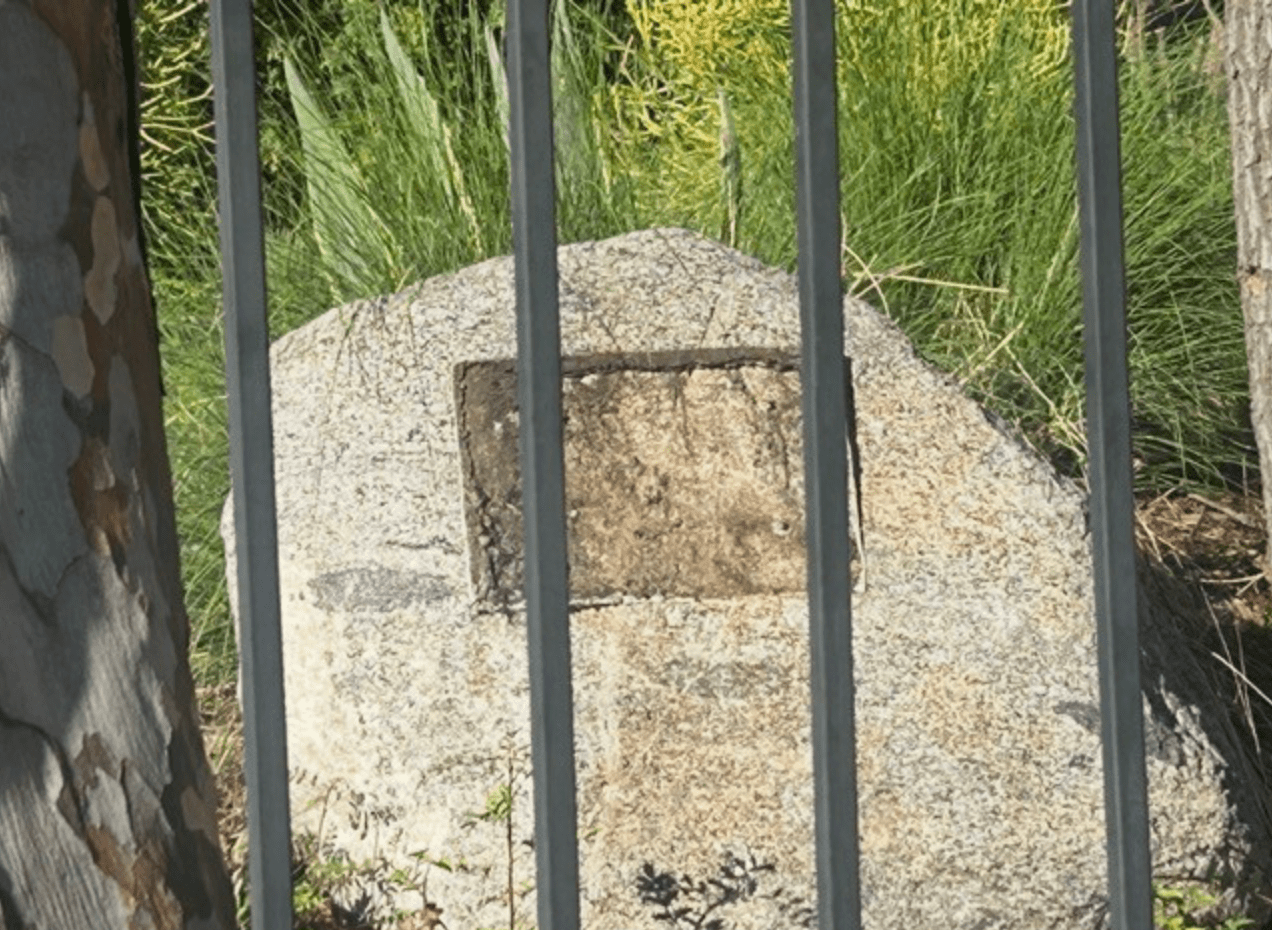
We live near the corner of Rosecrans and Sunny Ridge, and for as long as we’ve been here, there has been a small bronze plaque at that intersection, mounted on a rock in the little drought-tolerant garden behind the fence. You have to be paying attention to notice it. Most people driving past never do.
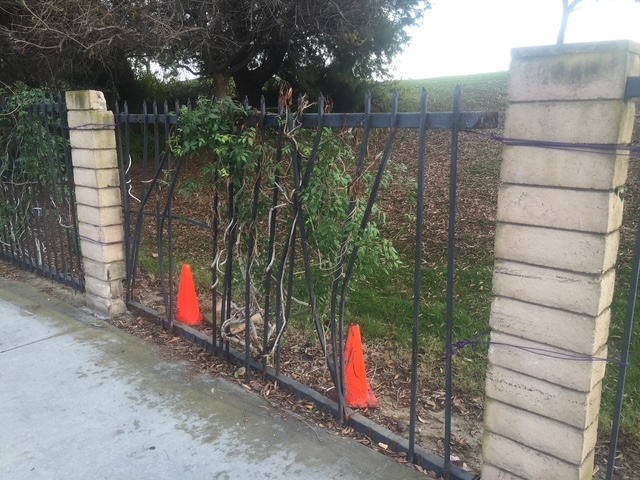 Sometime this summer, somebody pried it off and took it. I don’t know who. I doubt they knew what they were taking. Bronze gets stolen for scrap, and a plaque is a plaque to a thief. But I stood there, looking at the empty mounting on that rock, and found myself more upset than I expected, and it took me a minute to work out why.
The plaque was dated Completion of Construction – October 1997. The inscription thanked the residents and the elected officials whose efforts had made the cleanup happen. That’s a strange thing to put on a monument, if you think about it. Most markers commemorate a building or a battle or a person. This one commemorated a neighborhood refusing to be brushed off.
From 1942 to 1946, the 22 acres now known as the McColl Superfund Site were used as a dump for petroleum refinery waste — roughly 72,600 cubic yards of it, poured into twelve unlined pits. Benzene, tetrahydrothiophenes, metals. It sat there and leached into the soil and the groundwater underneath.
Then houses went up around it.
Starting in 1978, people living here complained about the smell and about getting sick. For years they were told, in effect, that they were imagining it. It wasn’t until state officials brought in the EPA and testing was actually done that anyone confirmed what the residents had been saying all along. The site was added to the federal National Priorities List in 1983. The oil companies fought for years afterward over who would pay.
Between 1996 and 1997, the pits were capped, a gas collection system went in, and monitoring wells were drilled. At community meetings, residents said they wanted the land folded into the golf course next door, and that’s what happened. Three holes of Los Coyotes Country Club now sit on top of it. EPA still monitors the site; the Fifth Five-Year Review, completed in 2022, found the remedies remain protective of human health and the environment.
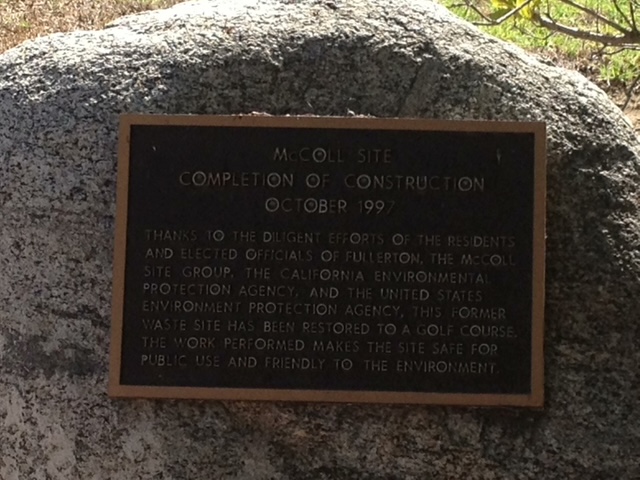 So the plaque wasn’t decoration. It was the receipt.
On August 8, I emailed the EPA. I wasn’t sure I expected much. I wrote: “Someone stole the McColl Superfund Site plaque at Rosecrans and Sunny Ridge Drive! This is very sad!! Please get this to the proper department to have it replaced! We live nearby.”
On August 12, Mari Kuceli of the EPA wrote back: “Thank you, Kevin, for informing us. We will have it replaced.”
I want to be careful not to make this bigger than it is. A plaque is a plaque. Nobody’s health depends on it, and the cap and the monitoring wells are doing the actual work of keeping this neighborhood safe.
But the people who fought for that cleanup are getting older, and some of them are gone. The kids in the houses around here are going to grow up on a hill with a golf course on it and no particular reason to ask what’s underneath. That little bronze rectangle was the one thing standing at the corner saying: this took forty years, and it took the people who lived here.
I’m glad it’s coming back.
If you notice damage or theft at the site, EPA Region 9’s Superfund office lists its Remedial Project Manager and Community Involvement Coordinator under “Site Contacts” on the McColl site profile at cumulis.epa.gov. Theft should also be reported to the Fullerton Police non-emergency line, (714) 738-6700.
Share this:

Discover more from Fullerton Observer
Subscribe to get the latest posts sent to your email.
Categories: Community Voices, Local News


Wow Kevin – thanks so much for this article and for the action you took. So impressive. One reason the measuring of toxins released from the site remain “protective “ of the area is because the triggering level that would require more cleanup was increased after it rose above the original triggering level.
Though many wanted the toxins dug up and removed – the oil companies including Chevron objected due to the higher cost – so the “remedy “ decided on became the monitoring one.