
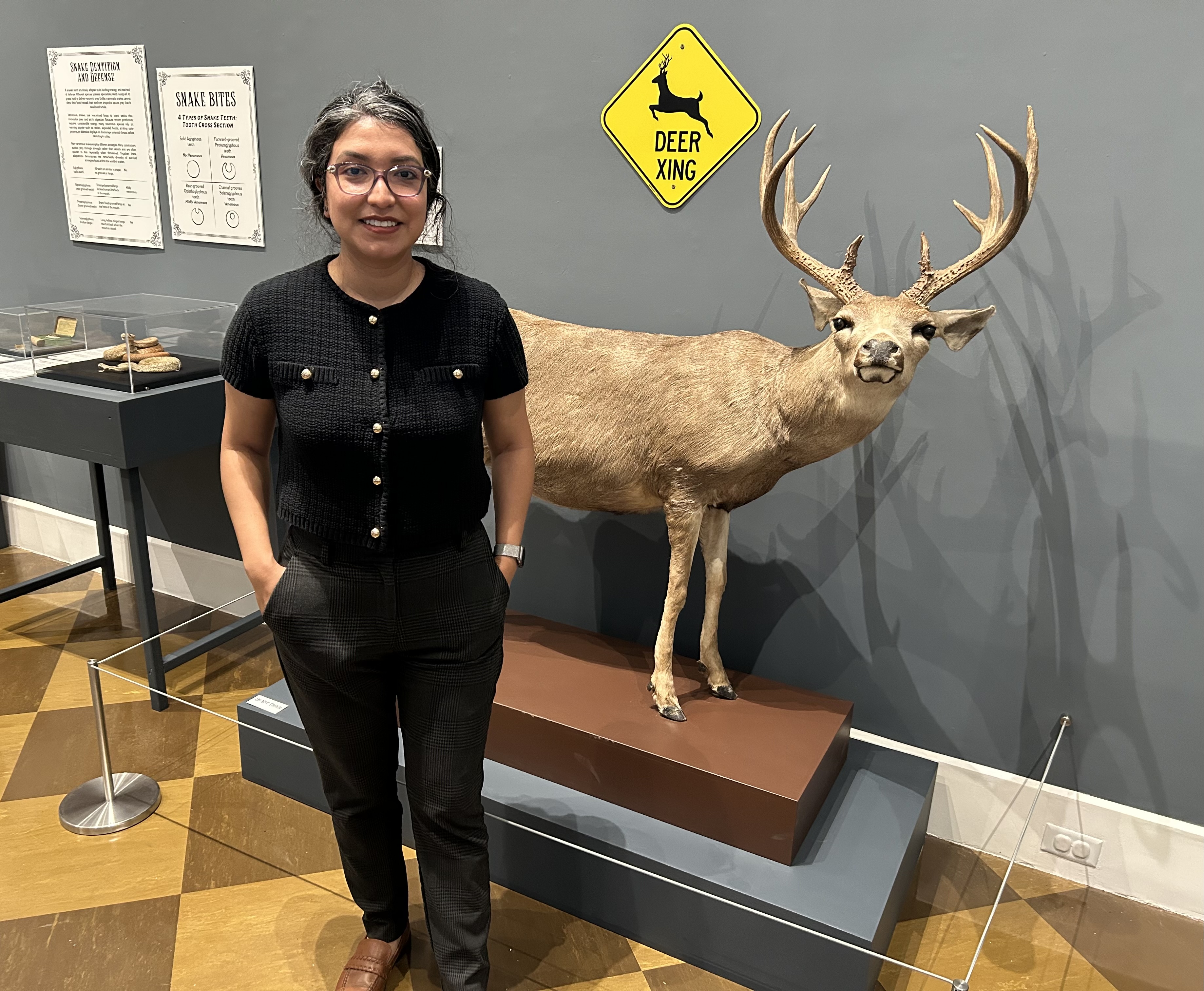
Final Rites curator Georgette Collard says deer are frequently involved in fatal car crashes.
A puffer fish, a vending machine and a radioactive ceramic pitcher might not seem to have much in common – unless you’re at Final Rites, a quirky exhibit on death and mourning at the Fullerton Museum Center.
The exhibit continues through January 3. The show explores three main themes: various ways to meet your maker (from venomous critters to arsenic-laced clothing), Victorian funeral customs (including a spooky mechanical doll) and attempts to conjure dead spirits (via Ouija boards, scrying mirrors and other accouterments).
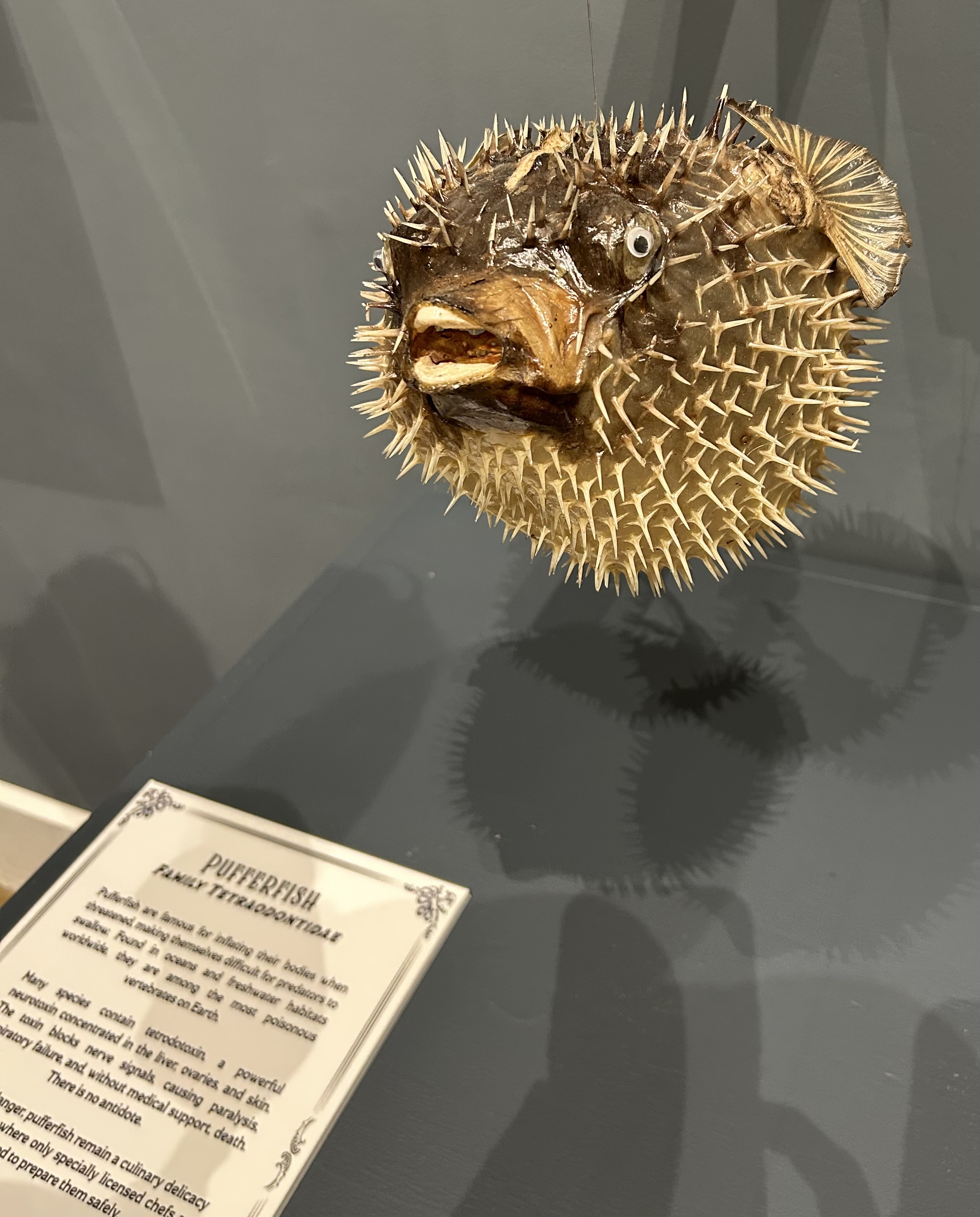
If not properly prepared, a puffer fish meal can be fatal.
The goal, says curator Georgette Collard, is to weave history, science and folklore into a fun, family-friendly presentation that gets visitors talking about the often uncomfortable topic of human mortality.
An offbeat TV series, “1000 Ways to Die,” inspired the exhibit. “I was watching reruns,” Collard says, and ideas started flowing. From there, it took a year to plan the displays, hunt down artifacts and build interactive props.
In one gallery, a grizzly bear lurks next to a skeleton climbing a ladder. Museum visitors who spin a nearby wheel learn that fatal ladder falls easily outnumber deadly bear attacks. In fact, “when we were putting up the exhibit, I almost became one of the statistics,” Collard says. A neighboring mock-up reveals that sharks are less dangerous than falling vending machines.
Other threats to life on view include uranium glassware (which Collard bought at an antique store on the Orange Circle), a bottle of Mercurochrome (a once popular antiseptic made with mercury), poisonous flowers, a stuffed deer (car vs. animal collisions kill hundreds of people a year), opium pipes and a jumbo mosquito sculpture (“responsible for more human deaths than any other animal on Earth”).
Because some of the items were considered safe or even healthful in recent decades, visitors may wonder which modern materials might eventually prove lethal, Collard says.
Next, the exhibit segues to what happens after someone dies. Or, rather, what used to happen during the Victorian era. Among the artifacts: post-mortem photo portraits, widow fashion accessories and bracelets crafted from the deceased’s hair. The braid jewelry seems similar to today’s practice of wearing pendants filled with cremated ashes. “It’s fun to see the parallels,” Collard notes.
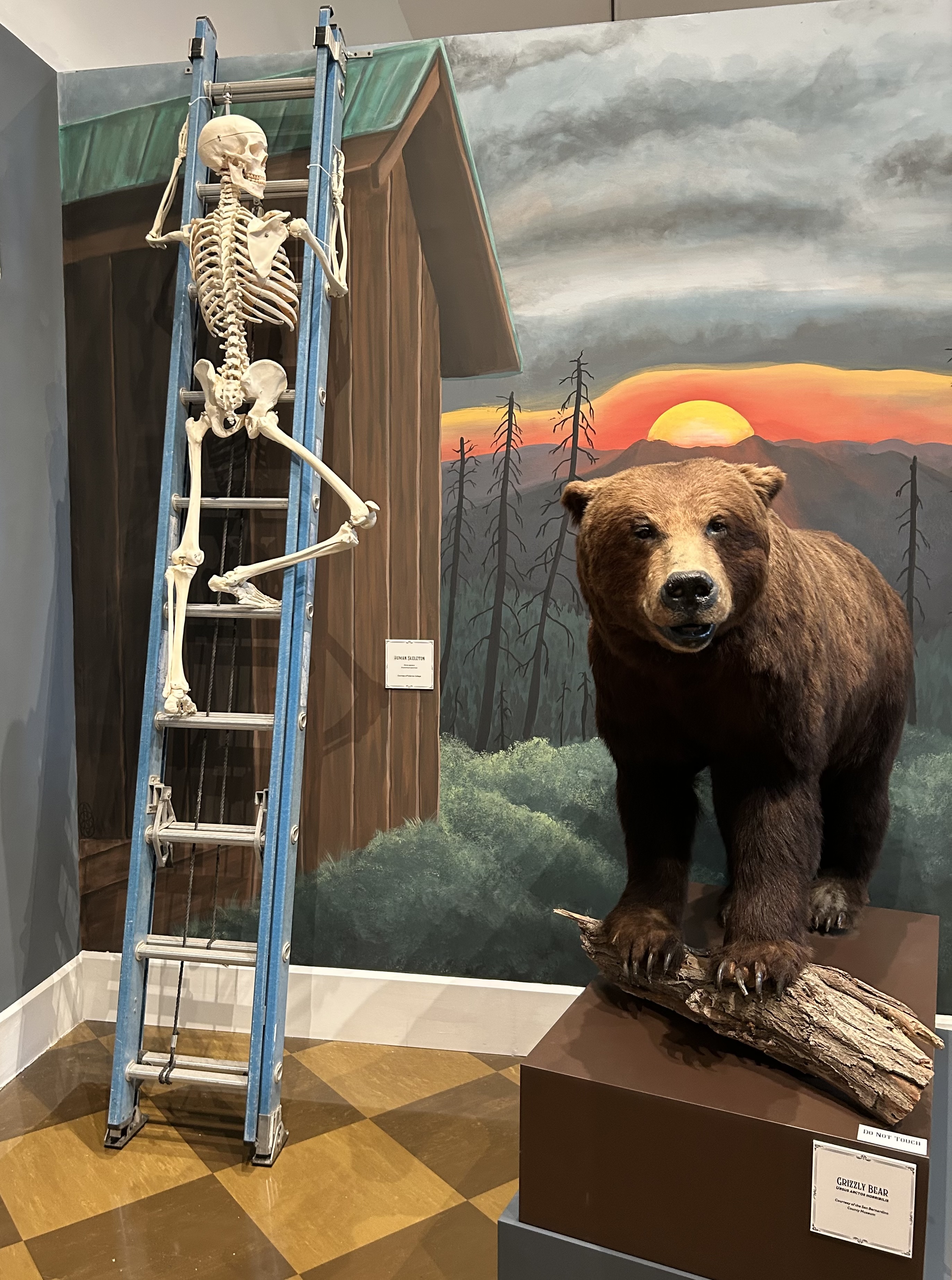
Are you more likely to be killed by a bear or climbing a ladder? Find out at the Fullerton Museum Center’s Final Rites exhibit.
More 1800s customs surface in the gallery’s replica mourning room: a grandfather clock that has been deliberately stopped, a wicker casket and a mirror draped in sheer black fabric.
The final stop is a faux fortunetelling parlor with a crystal ball, tarot cards and other methods for purportedly contacting dead spirits. The lone skeptical note is a placard that says the motion of Ouija board planchettes and divination pendulums can be explained by the “ideomotor effect,” in which “unconscious muscular movements [are] produced by thoughts, expectations, or suggestions.”
Aside from that caveat, “We try to be factual without saying something is true or fake,” Collard states. “People can believe what they want.” But in recognition that some museum guests may object to séance paraphernalia for religious reasons, she said this part of the exhibit was placed in a separate room so people can avoid it altogether.
For those who crave additional death-related content, the museum is also offering taxidermy classes, Haunted Fullerton walking tours and a Noche de Muertos festival. For information, visit fullertonmuseum.com.
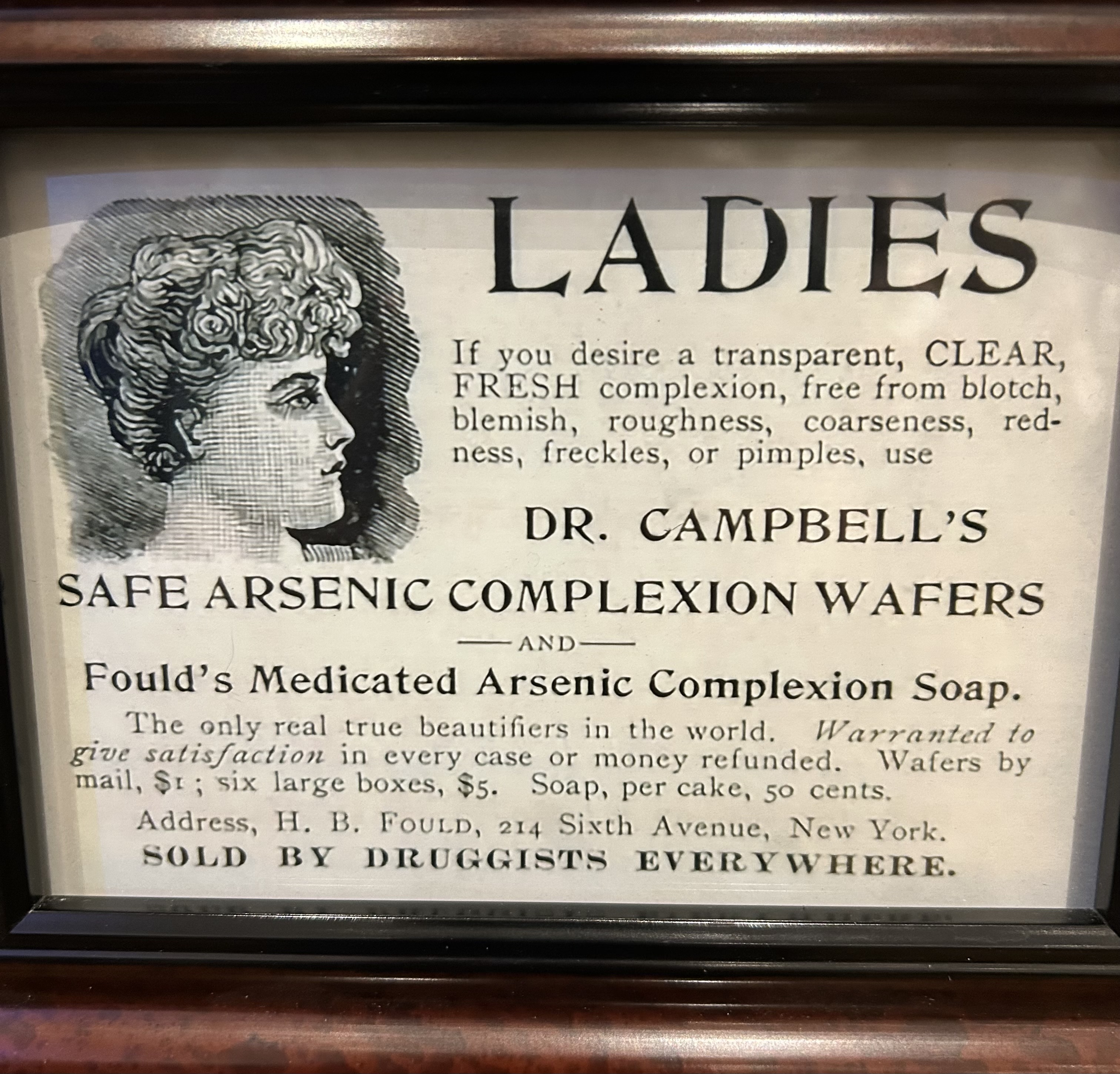
Arsenic was once deemed safe to use in cosmetics and as a green dye for dresses.
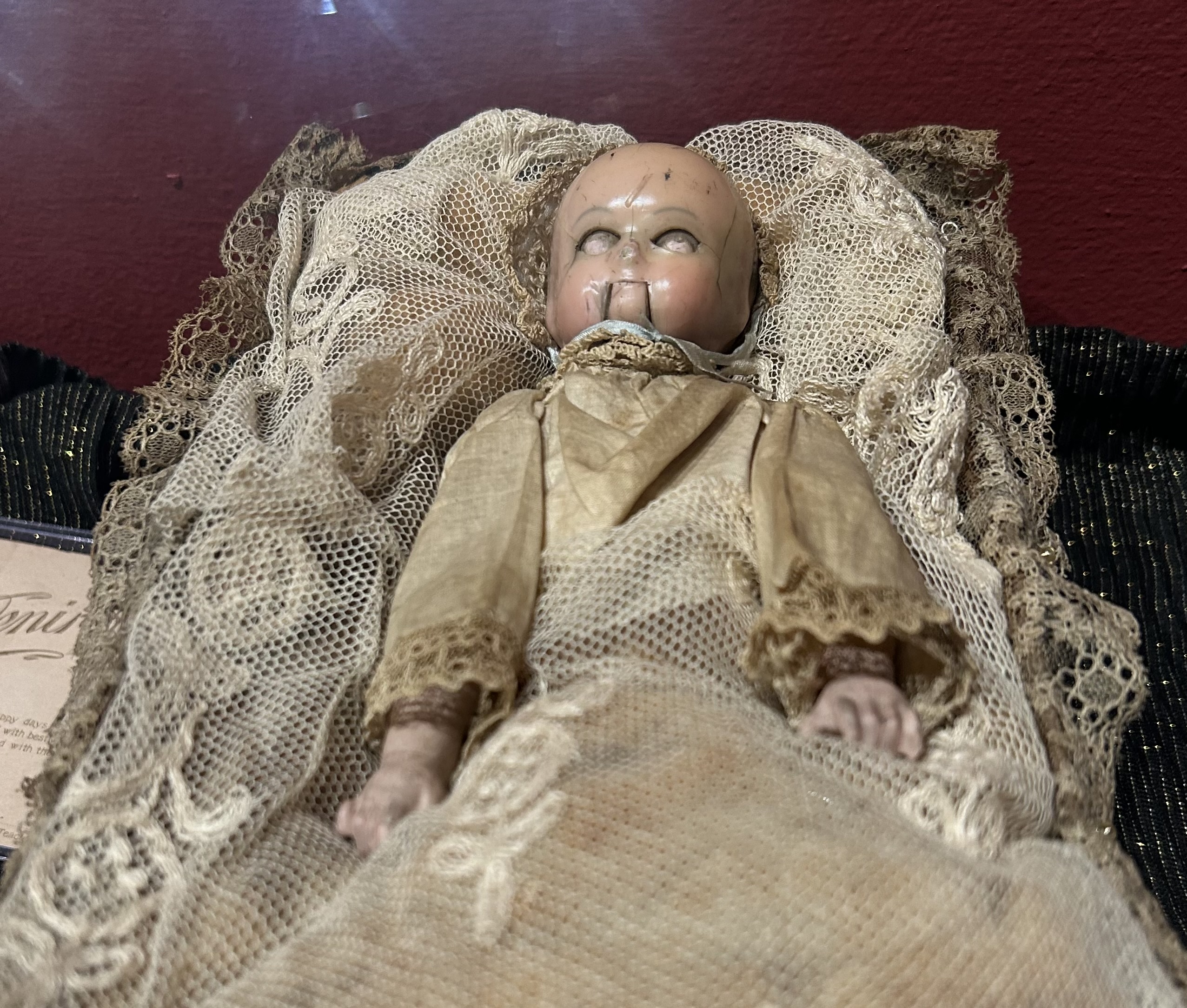
A mechanical mourning doll from the Victorian era.
Share this:

Discover more from Fullerton Observer
Subscribe to get the latest posts sent to your email.
Categories: Arts, Local News


