
A two-story home went up on Cornell Avenue, and preservationists contend it doesn’t belong there; it sits too close to the sidewalk, the architecture doesn’t match the historic neighborhood, and it towers over neighboring houses. According to Fullerton Heritage president Ernie Kelsey, the city was aware of the issues, but negotiations failed to stop construction, and the home was built in violation of Fullerton’s historic district rules. For Fullerton Heritage, this is the kind of battle they face in their attempt to safeguard historic buildings and neighborhoods.
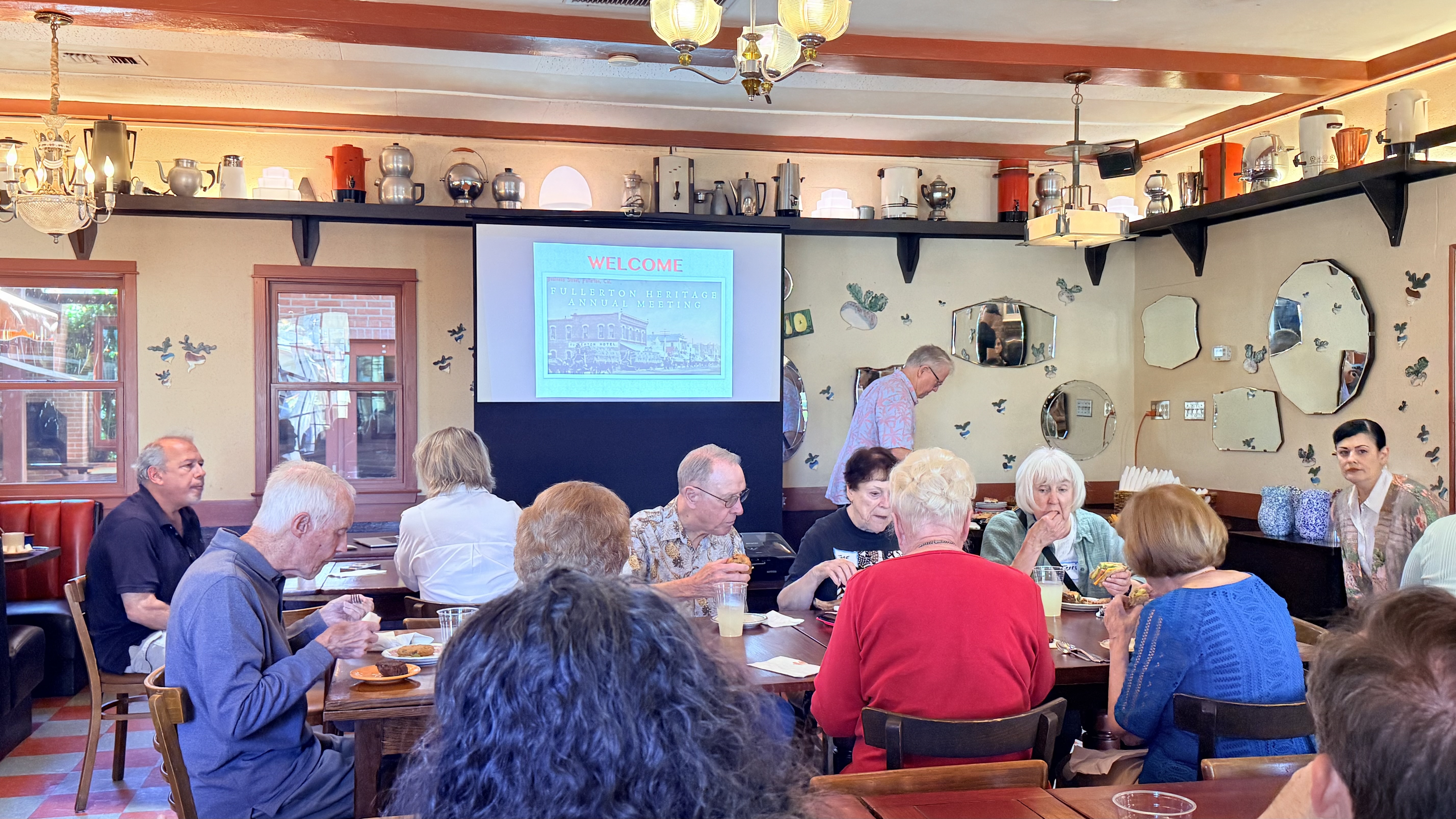
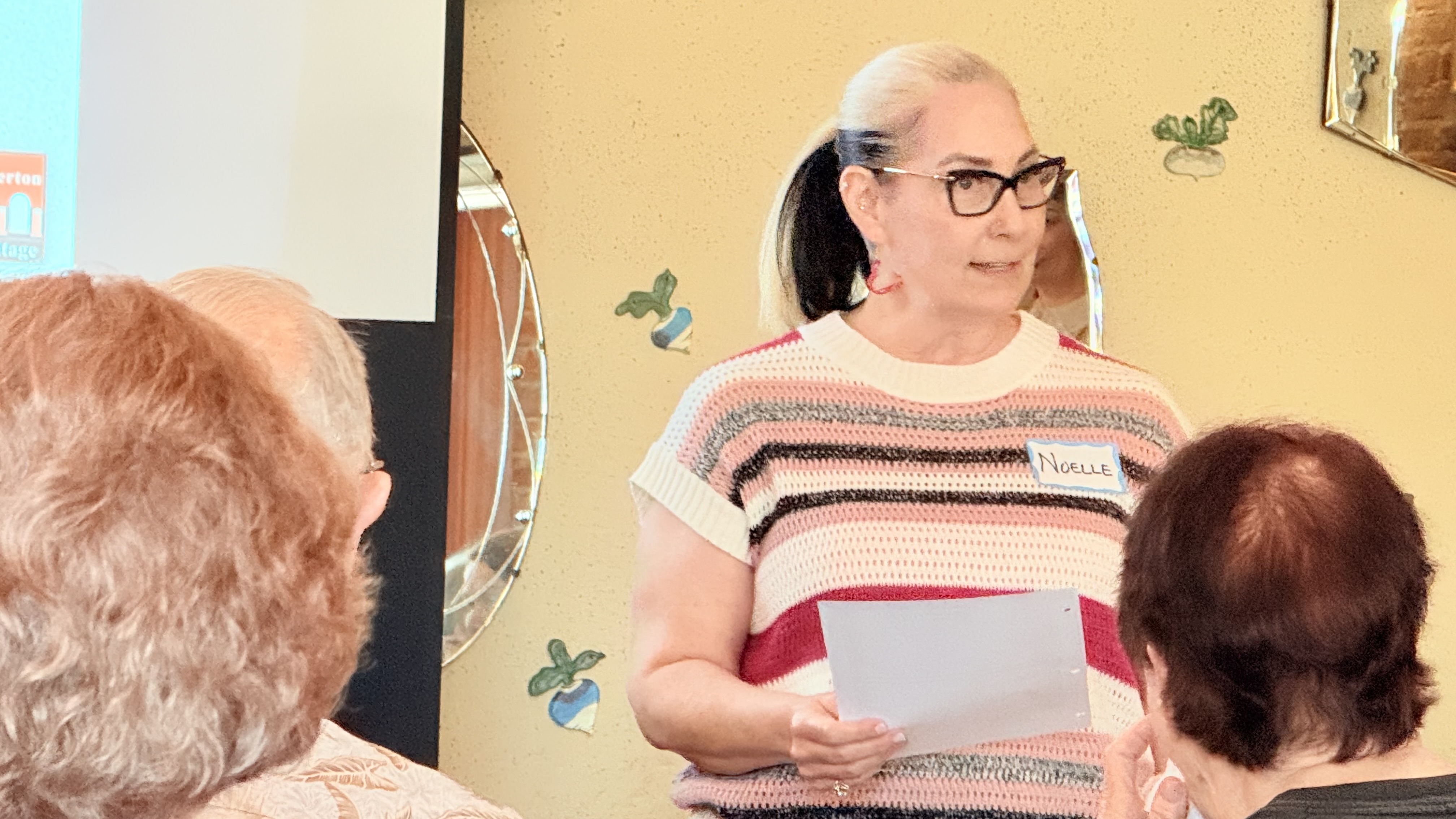
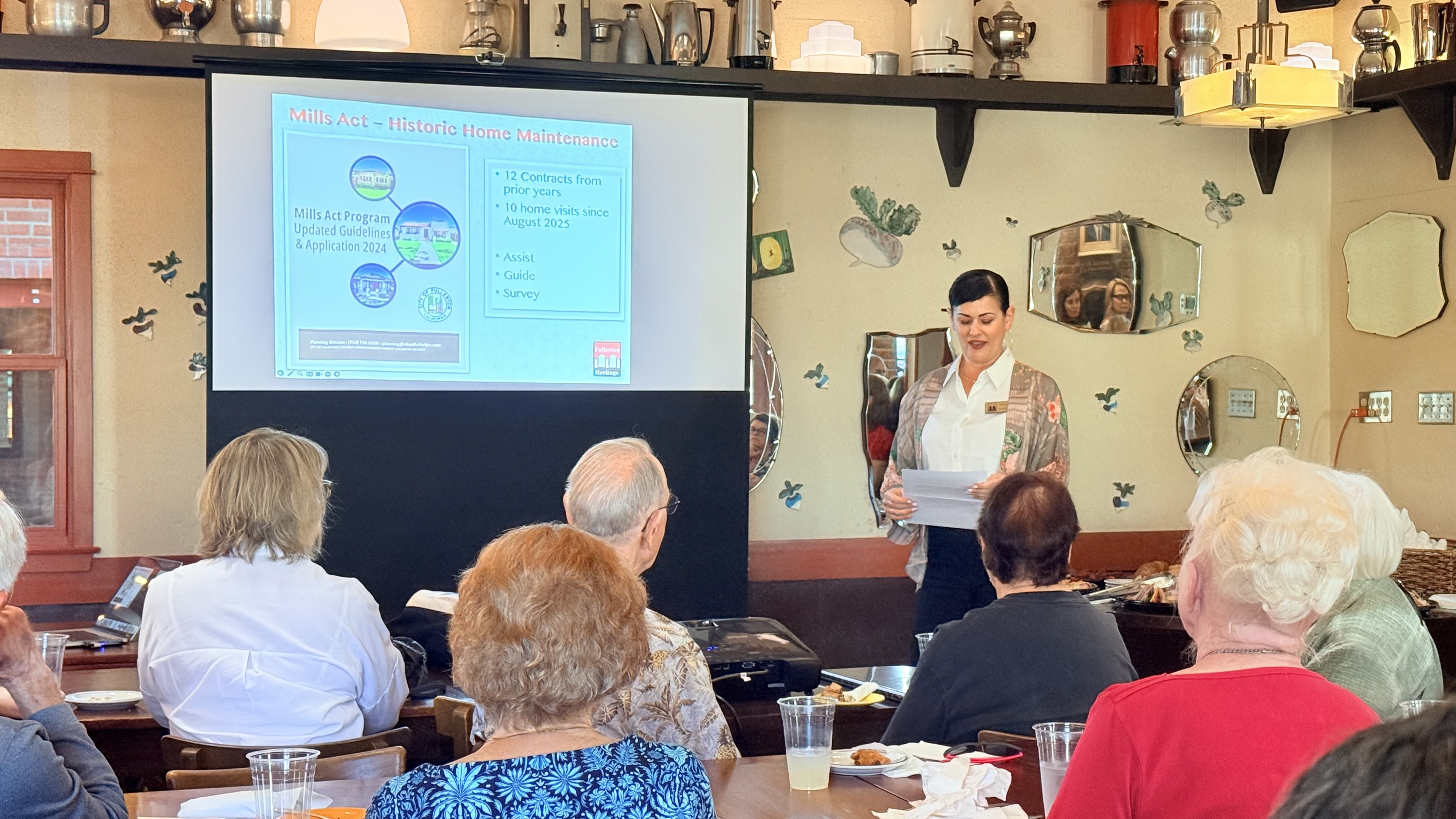
The warning came up more than once at Fullerton Heritage’s annual meeting on June 7, where the group gathered at Rutebagorz Restaurant, drawing its largest crowd of 46 attendees in its 34-year history. The all-volunteer organization works closely with the city to educate residents, advocate for historic resources, and communicate what’s at stake.
The Cornell Avenue home is not an isolated incident. Another blow to Fullerton Heritage was the demolition of the one-of-a-kind commercial building at 801 South Acacia, designed by noted mid-century modernist firm Jones & Emmons. The firm designed the seven floor plans for the 280 Eichler “Fullerton Forever Houses” that were built between 1953 and 1956. A handful of unmodified examples survive. “We had a historic building that was one of a kind… now it’s a vacant lot,” said Kelsey, bemoaning the permanent loss.
Kelsey, who has led the organization for several years, is direct about the stakes. “Our concern is that there might be other people who say, hey, I want to do the same thing,” he said of the Cornell Avenue situation. The longtime resident lives in a historic home himself and sees the organization’s work as a race against time. He expressed concern over new state housing laws that make it difficult to enforce historic district rules.
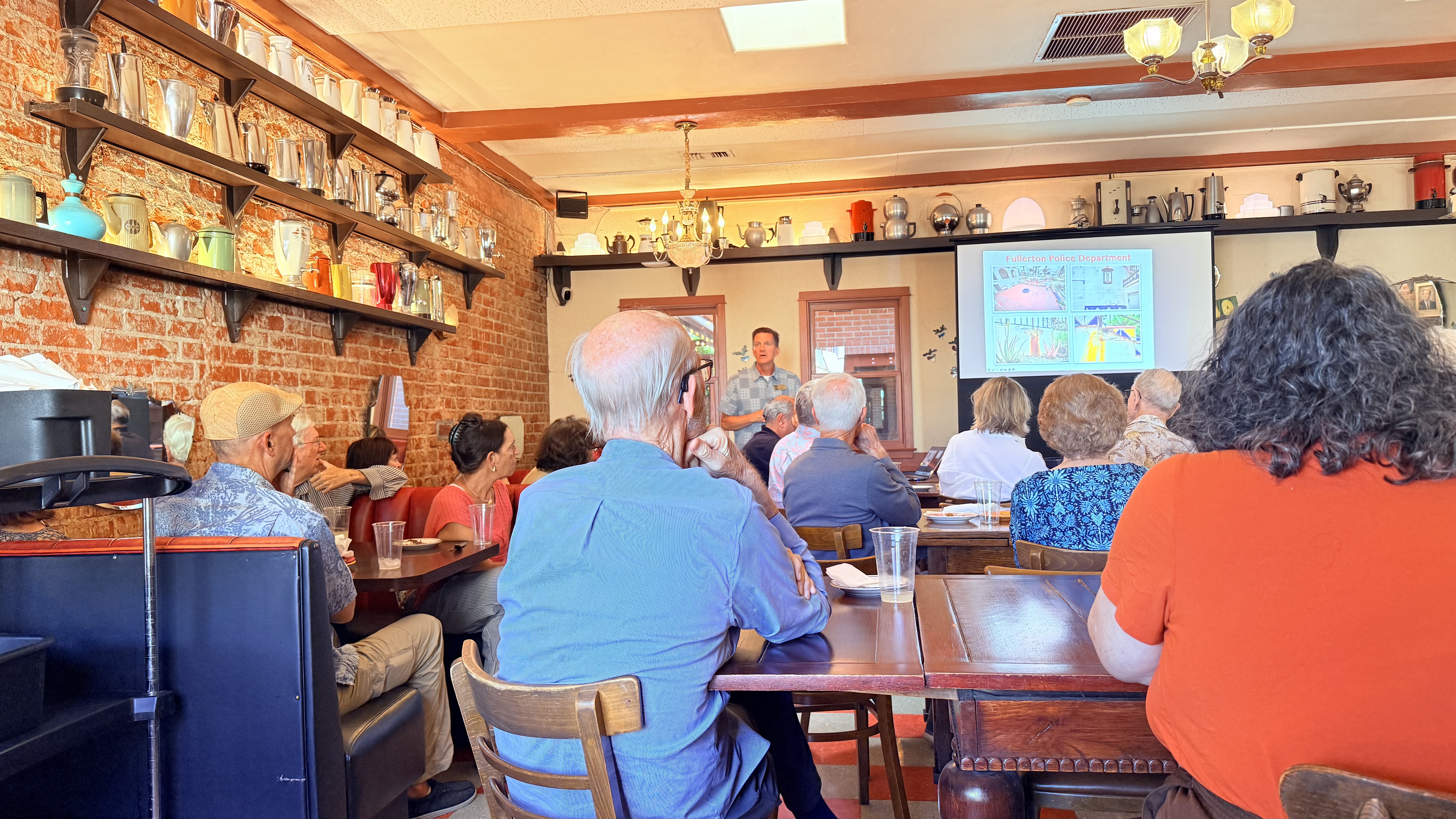
Despite the losses, Fullerton Heritage remains steadfast in its mission to protect Fullerton’s history. The city has accepted a $2.5 million grant from the U.S. Department of Housing and Urban Development (HUD) to restore and remediate the Fullerton Police Department, known as “Old City Hall”. The Dunbar Architecture team is leading the renovation design phase of the building because of their expertise in historic building renovations. Fullerton Heritage is working with city staff to preserve the Spanish Colonial Revival local landmark. The organization is concerned that the grant will not cover the cost of the needed courtyard repairs.
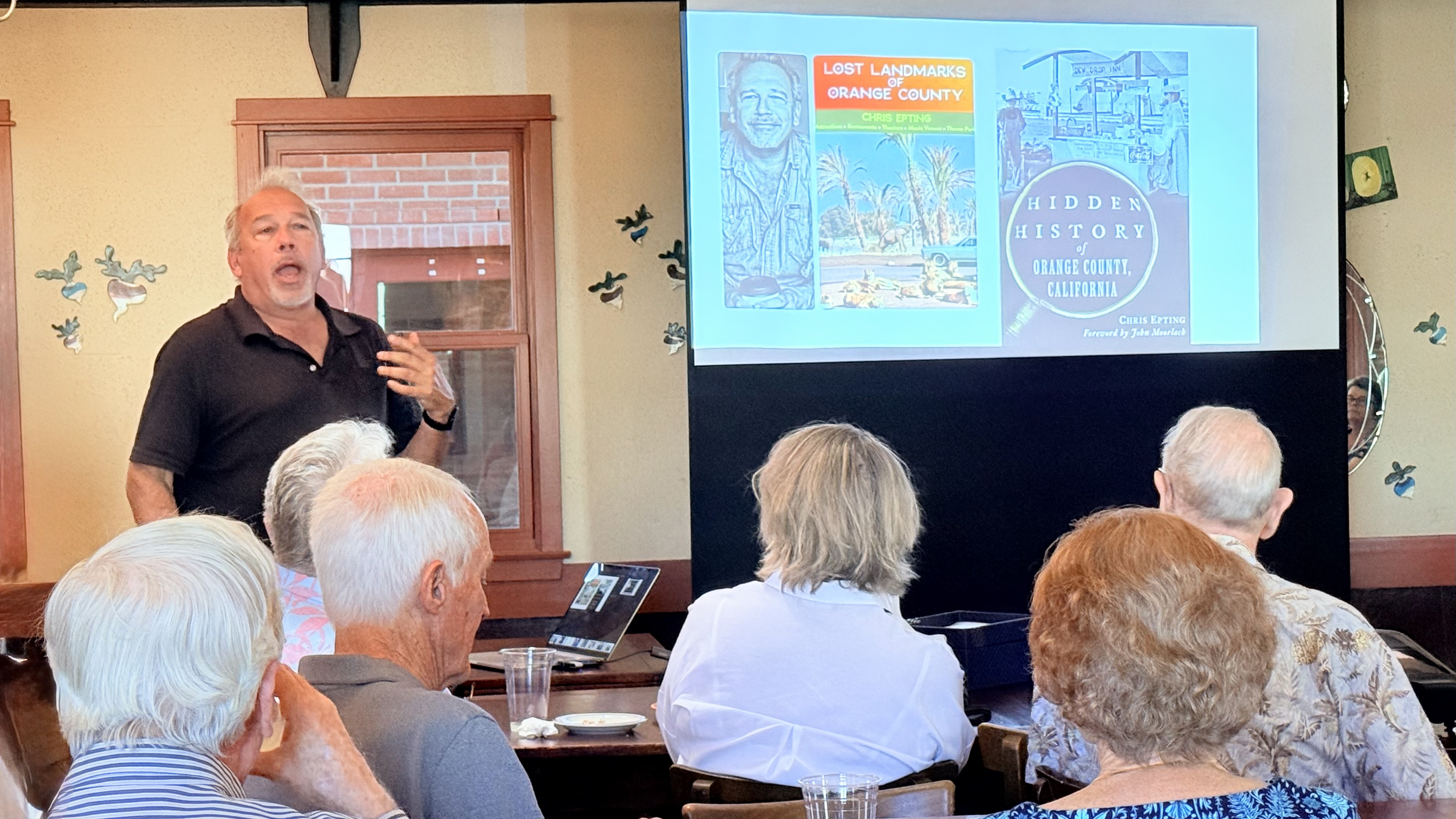
The urgency of their mission to preserve history was underscored by guest speaker Chris Eppling, author of over 40 travel and history books, including The Lost Landmarks of Orange County and the newly released The Hidden History of Orange County. Eppling researched Fullerton for years while writing a memoir with a resident and Baseball Hall of Famer, Tommy Lasorda and argued that the places where history has happened deserve to be recognized and protected.
Fullerton Heritage will face increasingly complex preservation challenges as new state housing laws are reshaping what cities can enforce in historic districts. For those who want to be more involved, Fullerton Heritage runs three walking tours of historic neighborhoods, provides an online database of 114 local landmarks at fullertonheritage.org, and operates an up-to-date hotline for residents with questions about preservation, landmark designation, and the Mills Act. Membership is open to anyone who believes in the importance of preserving Fullerton’s architectural history.
Share this:

Discover more from Fullerton Observer
Subscribe to get the latest posts sent to your email.
Categories: Local Events, local history, Local News


I appreciate what Fullerton Heritage has done to preserve Fullerton’s historical buildings and keep its history alive. I have been to many of their events and am amazed at their fund of knowledge and desire to share it with others.
But preserving history must not come at the expense of progress and meeting the evolving needs of a city, and this is a point where FH could do better. They opposed SB9 (ADUs) and SB79 (Transit-Oriented Development), both of which are critical to alleviating the housing and affordability crises, as well as improving walkability, fiscal sustainability, and community strength.
It is common for anti-housing advocates to use – even weaponize – ‘historical character’ against progress. But cities are not Disneyland. We cannot preserve them in epoxy for all time. We must allow for progress in housing and increased density. Otherwise, whom are we saving this city for? For younger generations who cannot afford to live here due to anti-housing policies?
I would love to see Fullerton Heritage balance its passion for historical appreciation and preservation with an understanding that cities must evolve as community needs change.
If we are going to talk about Disneyland, that is exactly what these SFH ADUs have become. They are going to tourist renters who are only going to stay in them for a few days. They are not going to those who need a long-term home to work in California.
The city can regulate short-term rentals, but most ADUs are used for long-term leases.
If you do care about those who need to stay here long-term, then I’m sure you’re all for building more affordable apartments, which come with long-term rental contracts, as well as condos, which by their nature attract long-term residents.
There is a new house being built on my street Cornell and it looks absolutely terrible. Just a no character giant rectangular box. It’s pretty hideous. Also there is no parking anywhere on my street. Every lot has multiple units and a minimum of 4+ cars and because we live within 100 yards of a bus stop the builders don’t have to include parking in their plans, this is completely unsustainable. Many of the garages where cars used to go have been converted into living spaces.